
Company history
Milestones
The entries are taken from the ARGUS timeline. New milestones can be added via the backend and will then appear here as well as on the company website.
Founded in Lüdenscheid
Am 29. September 1988 wurde die intec Gesellschaft für Informationstechnik mbH in Lüdenscheid gegründet. Zunächst stand die Auftragsentwicklung im Vordergrund; ergänzend entstanden eigene Produkte wie Telekommunikationsanlagen und ISDN-Karten.
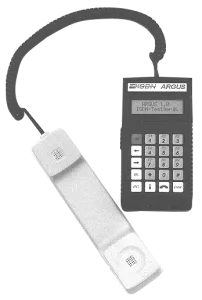
First ARGUS measuring instrument and in-house sales organisation
Der erste ARGUS-Tester der intec GmbH war ausgestattet mit einer ISDN-S0-TE-Schnittstelle sowie einem Prüfhörer. Das handliche, robuste Gerät wird auch heute noch von einigen Technikern eingesetzt. Im Jahre 1997 begann der Aufbau eines eigenen Vertriebsteams.
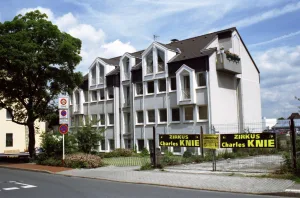
Moving to Rahmedestraße 90
1998 bezog intec das Gebäude an der Rahmedestraße 90 in Lüdenscheid. Damit standen mehr Büro- und Lagerflächen für das wachsende Unternehmen zur Verfügung.

ARGUS 2 for ISDN and analogue connections
The ARGUS 2 was the first ARGUS tester that could be operated not only on ISDN-S0 but also on UK0 and analogue connections (a/b). This meant that the ARGUS 2 was suitable for testing all standard telecommunications systems and domestic connections.
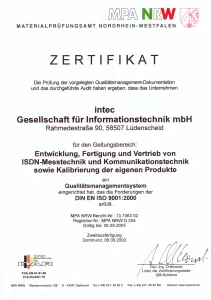
Quality management in accordance with DIN EN ISO 9001
Seit August 1999 hat die intec GmbH ein gemäß DIN EN ISO 9001 zertifiziertes Qualitätsmanagementsystem.
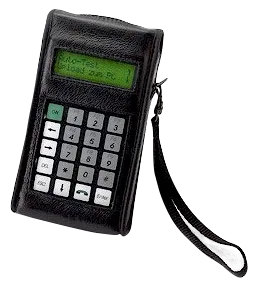
ARGUS 10 and ARGUS 20/22
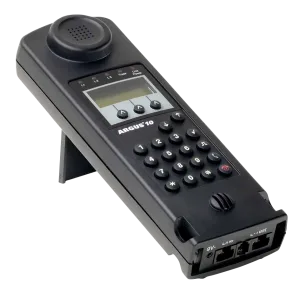
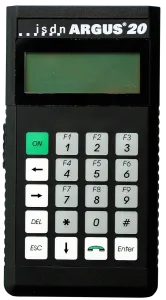
The ARGUS 10 was the first tester for the ISDN S0-NT interface to feature a new, large housing with a full-size keyboard and rechargeable batteries, representing a quantum leap in terms of usability and battery life in day-to-day work. The ARGUS 20 was the first simple S2M tester to be launched on the market, whilst the ARGUS 22 also featured an S0 extension.
First ARGUS meter for ADSL
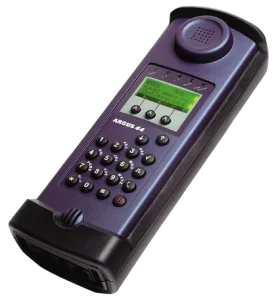
The ARGUS 44 was the first ARGUS multi-function tester for ADSL1. It tested the new DSL connection alongside the ISDN and a/b interfaces that were already supported.
Extension to the office building
The building on Rahmedestraße, which the company moved into in 1998, was extended with a new wing. This created additional office and storage space at the Lüdenscheid site.
Development of the first combined tester for SHDSL and S2M – ARGUS 28
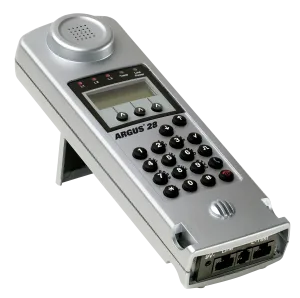
The ARGUS 28 was the first combined tester for SHDSL and S2M. SHDSL is frequently used by business customers and is characterised by its long range and the symmetrical distribution of downstream and upstream bandwidth.
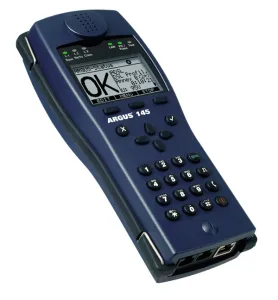
First ARGUS all-in-one tester with a large display
The ARGUS 145 was the first all-in-one tester with a large display. It tested ADSL2/2+, SHDSL (up to 4-wire), ISDN S0 and Uk0, as well as analogue connections (a/b). The ARGUS 145 was also the first ARGUS tester to offer triple-play tests (data, VoIP, IPTV) based on DSL.
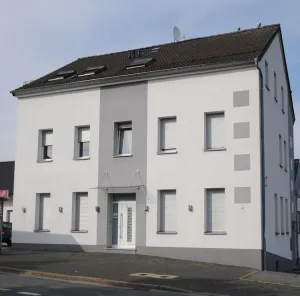
In-house logistics at the Lüdenscheid site
An adjacent building was converted for use as a warehouse, for logistics and process organisation. The aim was to ensure structured work planning and fast delivery times.
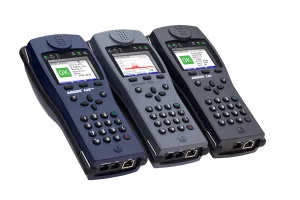
Product range featuring VDSL2 and a colour display
ARGUS 141, 142 and 145 plus marked the launch of the first generation of ARGUS devices featuring VDSL2, a colour display and a lithium-ion battery. This further improved ease of use and battery life for fieldwork.
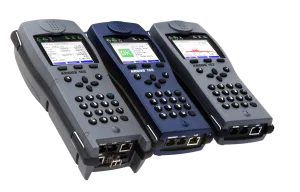
ARGUS tester with VDSL2 vectoring and ARGUS Copper Box
The next generation of xDSL was developed (VDSL2 with vectoring, ITU-T G.993.5 / G.vector) and rolled out by the major network operators as part of the German Government’s broadband initiative. The ARGUS testers 151, 152, 155, 162 and 165 were designed to meet the requirements of the new technology and were deployed across Europe. The portfolio was expanded to include the ARGUS Copper Box for the qualification of twisted-pair copper cables.
Tester for Super Vectoring and G.fast
On the path to the ‘Gigabit Society’, the Argus Tester 15x and 16x models from 2013 were upgraded to support VDSL2 Profile 35b (Super-Vectoring, ITU-T G.993.2 Annex Q) and G.fast up to 106 MHz. The ARGUS Testers 153, 156, 163 and 166 support the technology that has been rolled out in Germany since 2018.
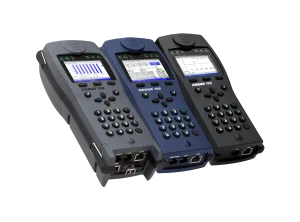
ARGUS 260 – the first ARGUS device with a touchscreen
The ARGUS 260 is the first ARGUS tester to feature a touchscreen display. It tests broadband connections ranging from ADSL and VDSL to Super Vectoring, Bonding and G.fast (106 + 212 MHz), and can be expanded to include fibre-optic functions via the SFP slot.
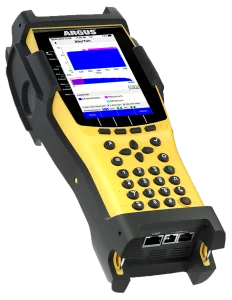
ARGUS 300: an all-in-one broadband tester
The ARGUS 300 combines fibre-optic, Ethernet, IP and copper measurements in a single platform. Depending on the configuration, it tests, amongst other things, GPON, Ethernet, WLAN, G.fast, xDSL and 10 Gigabit Ethernet, as well as optical functions such as OTDR and OPM.
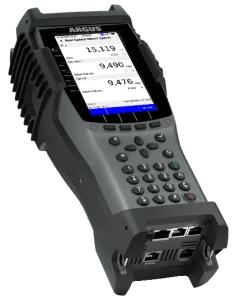
Portfolio expanded to include pure fibre-optic measurement technology
The ARGUS F240 was the first dedicated fibre-optic tester to be added to the product range. It measures optical levels, supports GPON and XGS-PON measurements, and enables ONT simulation with IP and performance tests.
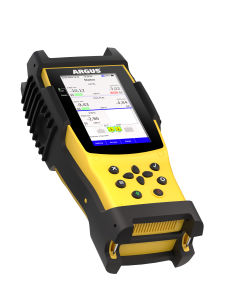
ARGUS F300 – Versatile fibre-optic tester for GPON and XGS-PON
The ARGUS F300 is a dedicated fibre optic tester that combines a wide range of fibre testing capabilities, such as OTDR, selective OPM, PON ID detection and performance tests.
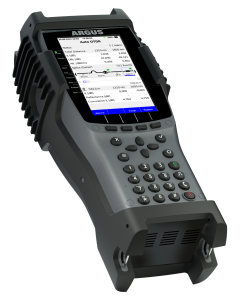
ARGUS F200 – Compact selective power meter
The ARGUS F200 expands the product range with a compact fibre-optic tester for the commissioning and testing of GPON and XGS-PON connections. The focus is on selective optical level measurement and ease of use in the field. At the same time, the ARGUS F200 completes the ARGUS F series (ARGUS F300, ARGUS F240, ARGUS F200).
The next generation at intec
With Nicholas and Julian Tix, the sons of Managing Director Markus Tix, the next generation has also been working for the company since 2026.